Festival & Sadya
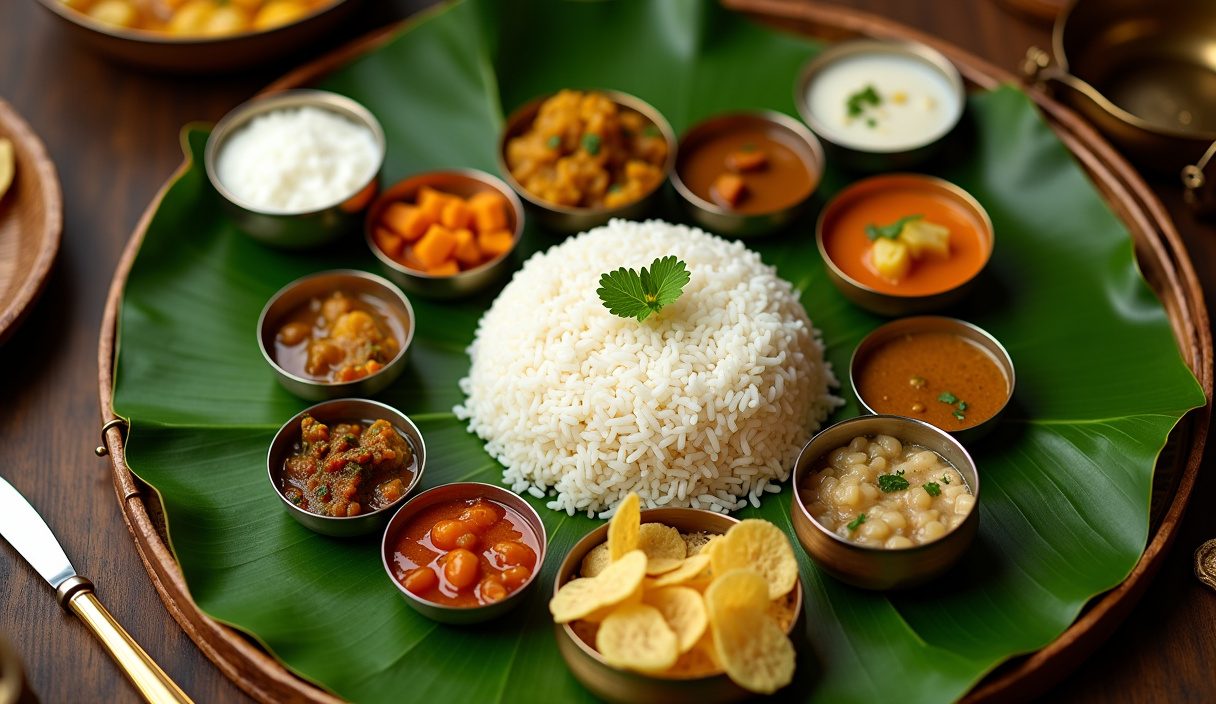
Onam Sadya: The Full Menu, the Leaf Layout and a Two-Day Plan
What goes on the leaf, where it goes, in what order it is served, and how to cook twenty-odd dishes across two days without losing your mind.

Why rice arrives in stages, what each small bowl is doing there, and the sequence the meal is designed around, which almost nobody explains to newcomers.
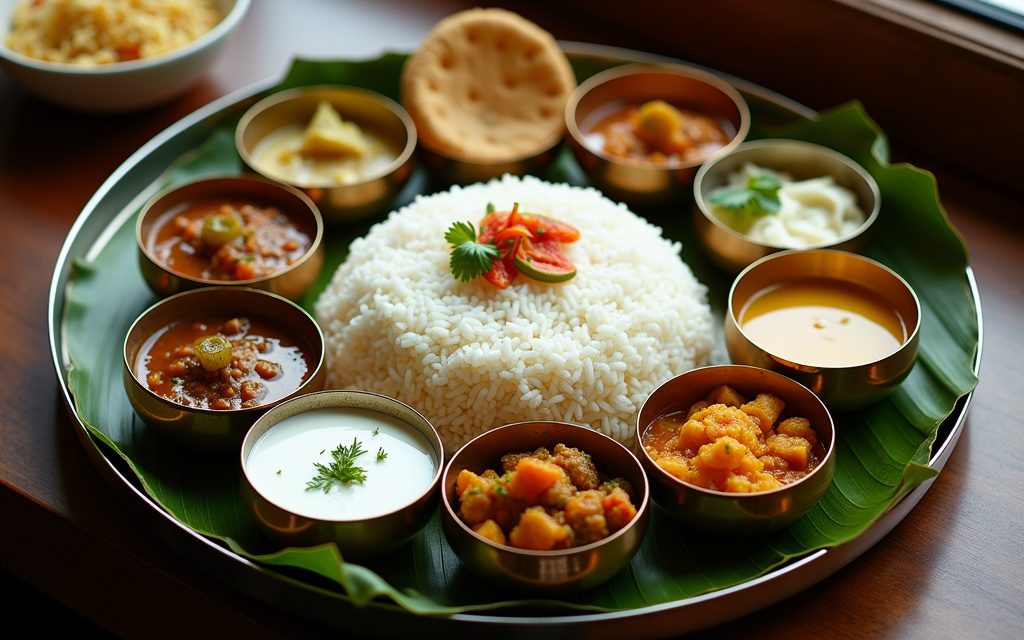
A South Indian thali arrives looking like a lot of small decisions you are expected to make at once. Six or seven little bowls, a mound of rice, a pappadam, something pickled, and no instructions. Most people default to mixing a bit of everything together, which is not wrong exactly, but it misses what the meal was designed to do.
The thali is a sequence. It moves from mild to strong to sour to cooling, and the rice is served in stages precisely so that each course gets its own clean portion. Once you see that, it stops being a puzzle.
The specific dishes vary by state and by restaurant, but the roles are consistent:
Sambar — the thick, tamarind-soured lentil stew with vegetables. The substantial course. Poured over the first serving of rice. Our sambar guide covers it in detail.
Rasam — thin, sharp, peppery. Comes after sambar, over a smaller serving of rice. Our rasam guide explains why it should never be boiled.
Curd (thayir) — plain, unsweetened, often with a pinch of salt. The last course, cooling and settling. In Kerala this is frequently a pulissery or moru curry instead, which is curd lightly cooked with coconut and turmeric.
Poriyal — a dry vegetable stir-fry with grated coconut, mustard seeds and curry leaves. Eaten alongside rather than over rice.
Kootu — vegetables cooked soft with dal into something between a curry and a mash, mildly spiced. The gentle counterweight to sambar.
Pickle — a small, intensely sour and salty relish. A pea-sized amount at a time. It is a seasoning, not a side dish.
Pappadam — crisp, salty, crushed over the rice for texture.
Payasam or a sweet — sometimes served at the start in Tamil tradition, sometimes at the end. Both are correct depending on where you are.
Rice — plain boiled rice, the centre of everything. In a proper meals service it is replenished, not served once.
Here is how the meal is meant to unfold. In a restaurant offering unlimited "meals", the server will follow this rhythm whether or not you do.
The reason for the staging is straightforward: sambar and rasam and curd are not meant to meet. Each is a different consistency and a different kind of sour, and pouring all three onto one pile of rice flattens them into a single muddy thing. Small separate portions keep each one distinct.
Thali food is designed to be eaten with the right hand, and it genuinely works better that way — you can feel the rice-to-curry ratio in a way a spoon does not allow.
The technique: use the fingertips, not the whole palm. Mix a small area of rice with the curry using the fingers. Gather it into a loose ball with the fingers curled, then use the thumb to push it into the mouth. Only the first knuckle or two should get messy. Cutlery is always available and nobody minds; but if you want to try, that is the motion.
Tamil Nadu: often starts with a sweet, and the meal leans on sambar, rasam and a sequence of vegetable sides. Banana leaf service is common.
Kerala: more coconut throughout, coconut oil rather than sesame, and the curd course is often pulissery. The full festival version is the sadya, covered in our Onam sadya guide.
Karnataka: sweeter sambar, frequently a bisi bele bath or a chitranna on the plate, and often a sweet like payasam or a holige served alongside rather than at the end.
Andhra and Telangana: noticeably hotter. Expect a fiery pickle, a gunpowder podi to mix with ghee and rice, and often a pappu (dal) distinct from the sambar.
No, though nobody will stop you. The meal is designed as a sequence of small rice portions, each paired with one thing. Mixing all of it at once loses the contrast the sequence was built to create.
In South Indian restaurants, a "meals" plate is refilled as you eat — rice, sambar, rasam and the sides are topped up until you signal you are done. Covering the plate with your hand, or simply saying so, stops the refills.
Because it is extremely concentrated. South Indian pickles are far saltier and more sour than most people expect. A quantity the size of a pea, taken with a mouthful of rice, is the intended dose.
The classic South Indian meals plate is vegetarian, and often vegan apart from the curd and ghee. Non-vegetarian thalis exist, particularly in coastal Kerala and Andhra, usually adding a fish or meat curry to the same structure rather than replacing it.
A standard "South Indian meals" or "full meals" plate. It will come with the sequence above. Eat it in order and pay attention to how different the same rice tastes with sambar, then rasam, then curd — that contrast is the entire point of the format.
What goes on the leaf, where it goes, in what order it is served, and how to cook twenty-odd dishes across two days without losing your mind.
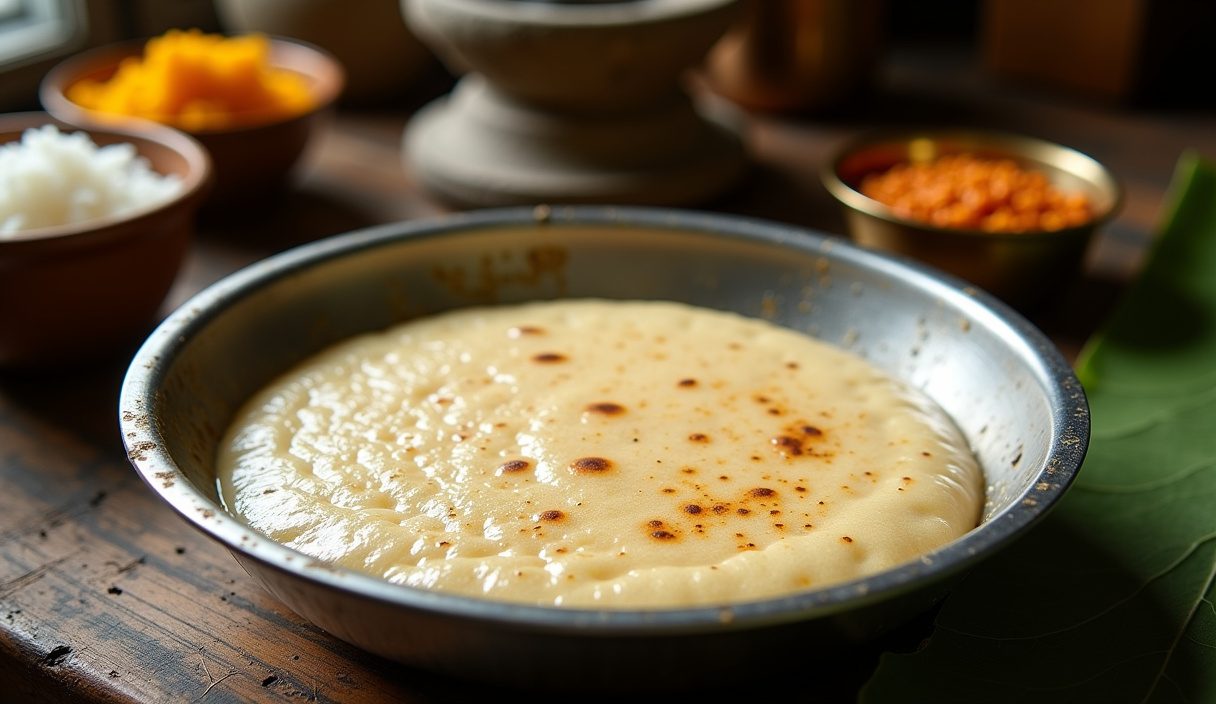
The rice to dal ratio, why fenugreek belongs in the soak, how long to ferment at your room temperature, and what to do when the batter refuses to rise.
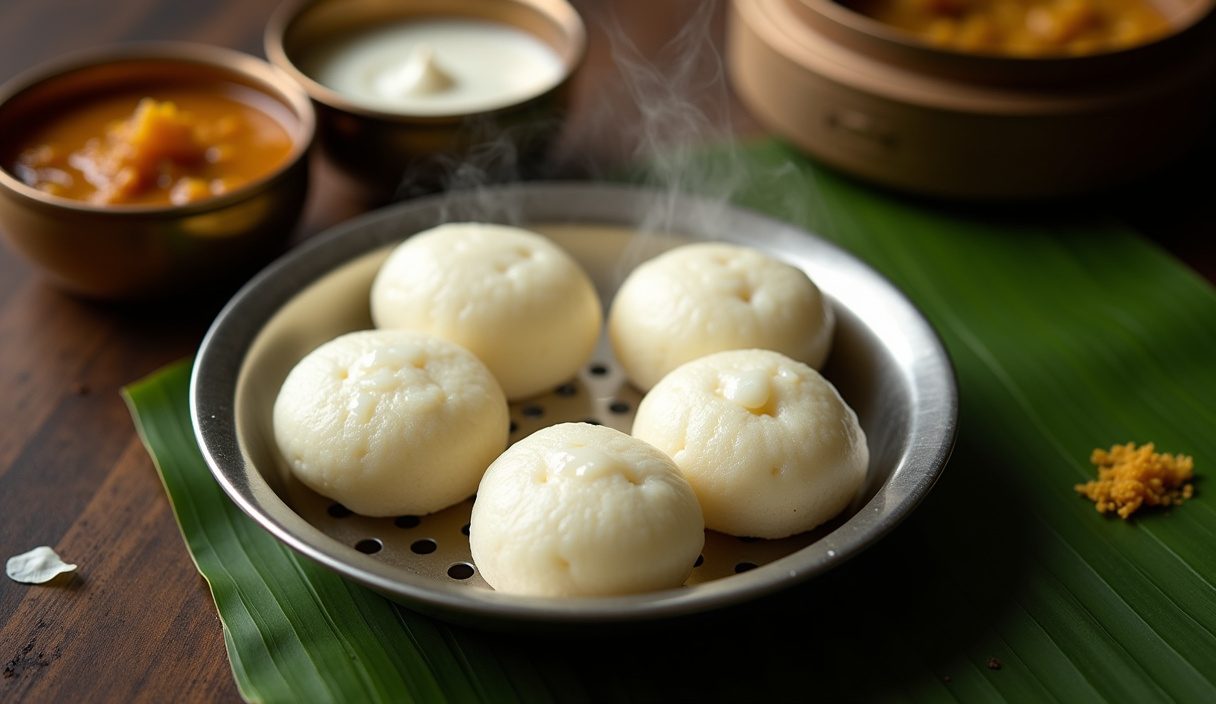
Why idli batter is ground differently from dosa batter, how long to steam, and the reasons idli comes out flat, dense, sticky or sour.