Breakfast & Tiffin
Soft Idli Recipe: The Batter, the Steam and the Common Mistakes
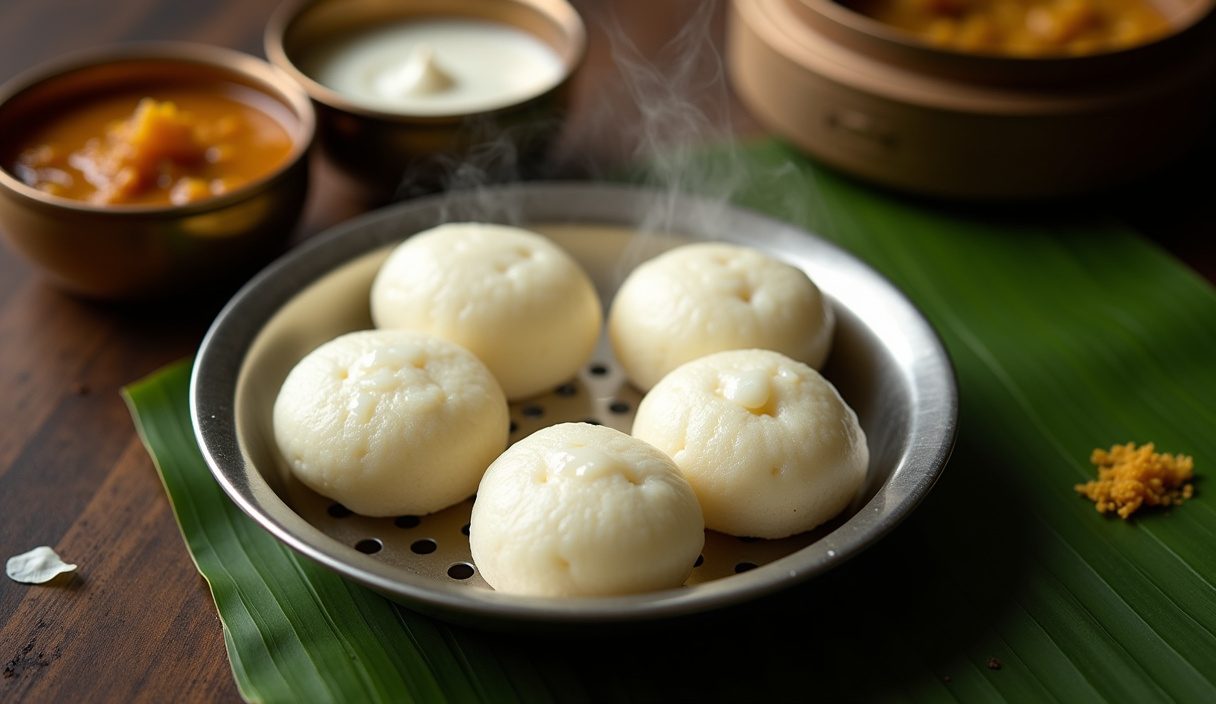
Why idli batter is ground differently from dosa batter, how long to steam, and the reasons idli comes out flat, dense, sticky or sour.

The rice to dal ratio, why fenugreek belongs in the soak, how long to ferment at your room temperature, and what to do when the batter refuses to rise.
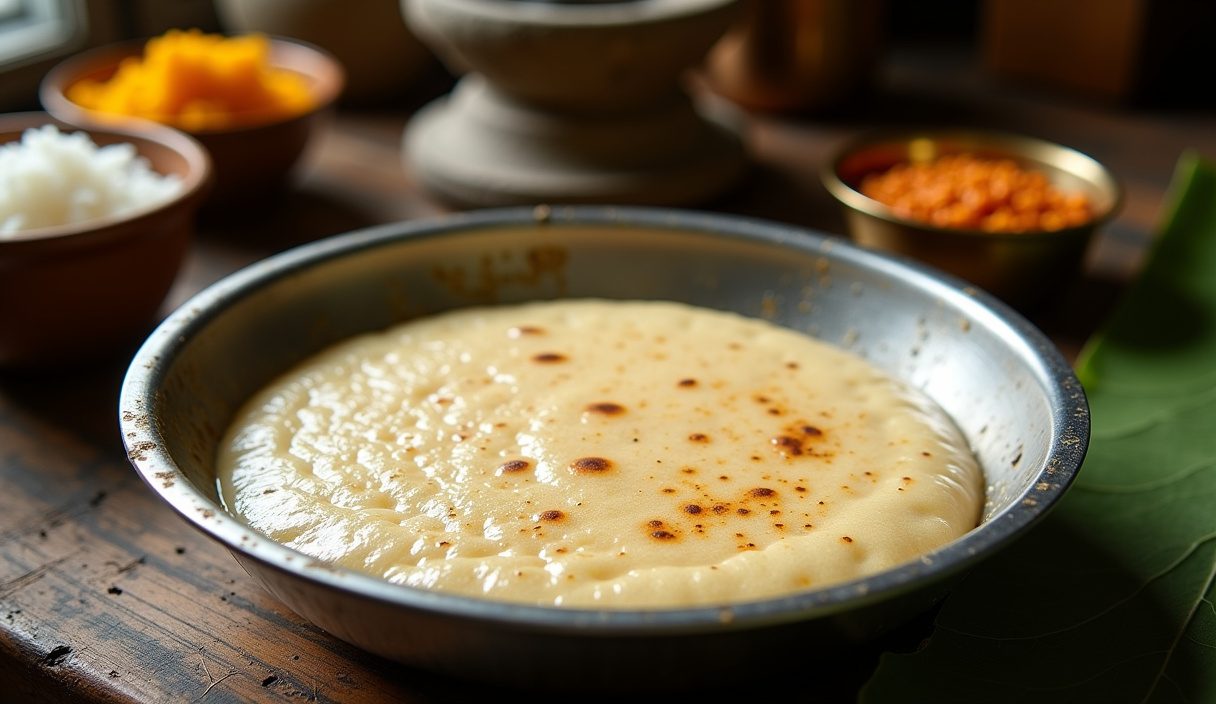
Dosa batter is the first thing to learn in a South Indian kitchen and the thing most people get wrong twice before they get it right. The ingredient list is almost absurdly short: rice, urad dal, fenugreek, salt, water. Everything that determines whether you end up with a lacy, crisp dosa or a pale rubbery disc happens in the handling, and almost all of it happens before the batter ever touches a pan.
This guide gives the ratio I use at home, then explains what each step is actually doing, so that when your kitchen is cold, or your rice is a different variety, or you only have a mixer-grinder, you can adjust rather than guess.
For a batter that makes crisp dosa and can also be poured thick for uttapam:
That is 4:1 rice to dal. Some households go 3:1 for a softer, more forgiving batter, and 5:1 for a very crisp, thin dosa. If you are new, start at 4:1. It ferments reliably and it behaves well on the pan.
A note on rice: idli rice is short-grain parboiled rice and it is the easiest to work with because it grinds to a smooth paste and holds water well. Regular raw rice such as sona masoori works, and gives a slightly crisper dosa with less body. Basmati does not work well here; it is too long-grained and too low in the starch that gives the batter structure.
A teaspoon of fenugreek seeds looks like a rounding error against three cups of rice, and it is the single most useful thing in the list. Fenugreek does three jobs. It carries wild yeasts and bacteria that help the fermentation start. It contributes the faintly sweet, slightly bitter aroma that makes a dosa smell like a dosa. And it helps the batter brown properly, which is why dosas made without it often come out pale no matter how hot the pan is.
Soak it with the dal, not the rice. It softens at the same rate and grinds into the dal smoothly.
Soak the rice in one bowl and the dal with the fenugreek in another. Four to six hours is right in a warm kitchen; six to eight if your water is cold. Do not soak overnight in hot weather, because the dal begins to ferment in the bowl and the batter turns sour before it has risen.
If you are using poha, add it to the rice bowl for the last thirty minutes only. It softens very quickly and it goes slimy if left for hours.
Drain the dal but keep the soaking water. Urad dal soaking water is slightly viscous and it grinds beautifully. Use it as your grinding liquid and the batter will be smoother and will aerate better. Discard the rice soaking water; it does nothing useful.
Grind the dal first, on its own, and take your time with it. This is the step that puts air into the batter, and air is what makes the batter rise. In a wet grinder, twenty to twenty-five minutes with water added a little at a time. In a mixer-grinder, work in two or three batches, pulse rather than run continuously, and stop every thirty seconds to let the motor cool and to scrape the sides down.
You are looking for a batter that is white, very smooth, and visibly fluffy, roughly the texture of softly whipped cream. Drop a small blob into a glass of water: properly ground urad dal batter floats. If it sinks, keep grinding.
Then grind the rice. This needs less care and less time. Rice batter should be smooth but a very slight graininess, like fine semolina between your fingers, is fine and actually helps the dosa crisp. Use as little water as you can get away with.
Combine the two in a large vessel and mix with your hand, not a spoon, for a good minute. This is not superstition. The warmth and the bacteria on your hands genuinely help fermentation start, and hand-mixing incorporates air in a way a spoon does not. The vessel should be no more than half full, because the batter will roughly double.
This is where most recipes fail their readers by giving a single number. Fermentation is a temperature problem, not a clock problem. Rough guidance:
In a cold kitchen, the reliable trick is an oven with only the internal light on, door closed. That usually holds around 27 to 30°C. An instant pot on yoghurt setting works too. A thick blanket wrapped around the vessel and left in the warmest corner of the house is the low-tech version and it does work, just slowly.
The batter is ready when it has risen noticeably, the surface is covered in small bubbles, and it smells pleasantly sour, like yoghurt rather than like vinegar. Stir it gently once; it will deflate a little, and that is normal.
In a warm climate, add salt before fermenting; it moderates the pace and keeps the batter from turning too sour. In a cold climate, add it after, because salt slows fermentation and in a cold kitchen you need all the speed you can get. If you are unsure, add it afterwards. You can always mix salt into a risen batter; you cannot un-salt one that refused to rise.
The batter for dosa should pour like thick cream. Straight from fermentation it is usually a little too thick, so loosen it with a few tablespoons of water until a ladleful runs off the ladle in a continuous ribbon.
Heat a cast iron or carbon steel tawa over medium-high heat until a few drops of water flicked onto it dance and evaporate within a couple of seconds. If they vanish instantly with a hiss, it is too hot. Rub the surface with half an onion dipped in oil. This sounds like folklore but it seasons the surface and stops the first dosa sticking, which it otherwise almost always does.
Pour a ladleful in the centre and spread outwards in a spiral with the base of the ladle, working quickly and without pressing hard. Drizzle a teaspoon of oil or ghee around the edge. Cook until the edges lift and the underside is golden-brown and lacy, about a minute to ninety seconds. For a crisp dosa, do not flip it; fold and serve. For uttapam, pour thick, do not spread, scatter chopped onion and chilli on top, cover for a minute, then flip.
Between dosas, wipe the pan with half an onion or a damp cloth and let the temperature settle. A pan that gets progressively hotter is the reason the fifth dosa is worse than the second.
Almost always temperature. Below about 20°C the bacteria barely work. Move it somewhere warmer and give it another eight hours before you give up. The other common cause is salt added early in a cold kitchen, or chlorinated tap water used for soaking. If your water is heavily chlorinated, use filtered water.
Usually too much dal, or the batter is too thick, or the pan is not hot enough. Thin the batter with water, raise the heat, and next time try 4.5:1 rice to dal. Omitting fenugreek also causes pale, soft dosas.
It has over-fermented, which happens fast above 30°C. It is still usable: it will make good uttapam and paniyaram, where a sour note is welcome. To slow it down next time, add the salt before fermenting and cut the time. Once risen, refrigerate immediately.
A new or poorly seasoned tawa is the usual culprit. Season it: heat it, rub with oil, let it cool, repeat several times. Also make sure the pan is properly hot before the first dosa, and wipe it with an oiled onion between each one.
Refrigerated in a covered container, three to five days. It continues to sour slowly, so the dosas on day four will taste tangier than on day one. Bring it to room temperature for twenty minutes before using, and thin with a little water as needed. Batter can be frozen for a month, though the texture suffers slightly.
The same batter, adjusted in thickness, gives you most of a tiffin menu. Poured thick with onion pressed in, it is uttapam. Dropped into a dimpled pan with a tempering stirred through, it is paniyaram. Ground coarser and wetter, it becomes idli batter, which is the subject of its own guide because the grind and the ratio change meaningfully.
Serve dosa with coconut chutney and sambar, and if you are doing the thing properly, a tumbler of filter coffee afterwards.
Why idli batter is ground differently from dosa batter, how long to steam, and the reasons idli comes out flat, dense, sticky or sour.
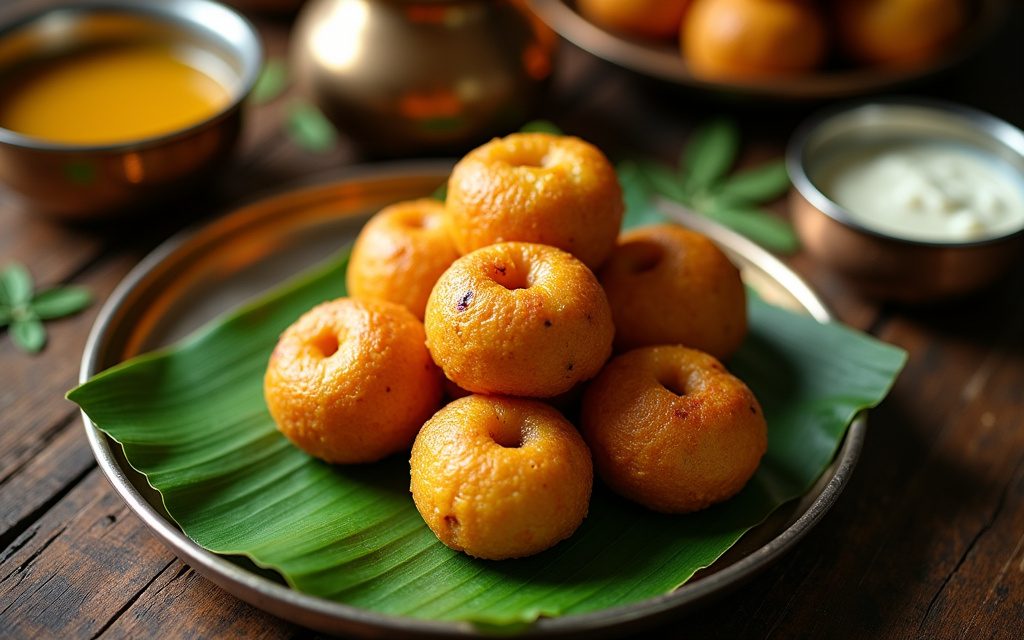
No fermentation here, just a thick aerated urad dal batter, a wet palm and oil at the right temperature. The shaping is the part that takes practice.
The grind, the chicory question, how tightly to pack the filter, and the long pour between tumbler and davara that gives the coffee its foam.