Breakfast & Tiffin
Dosa Batter Recipe: Ratios, Fermentation and Troubleshooting
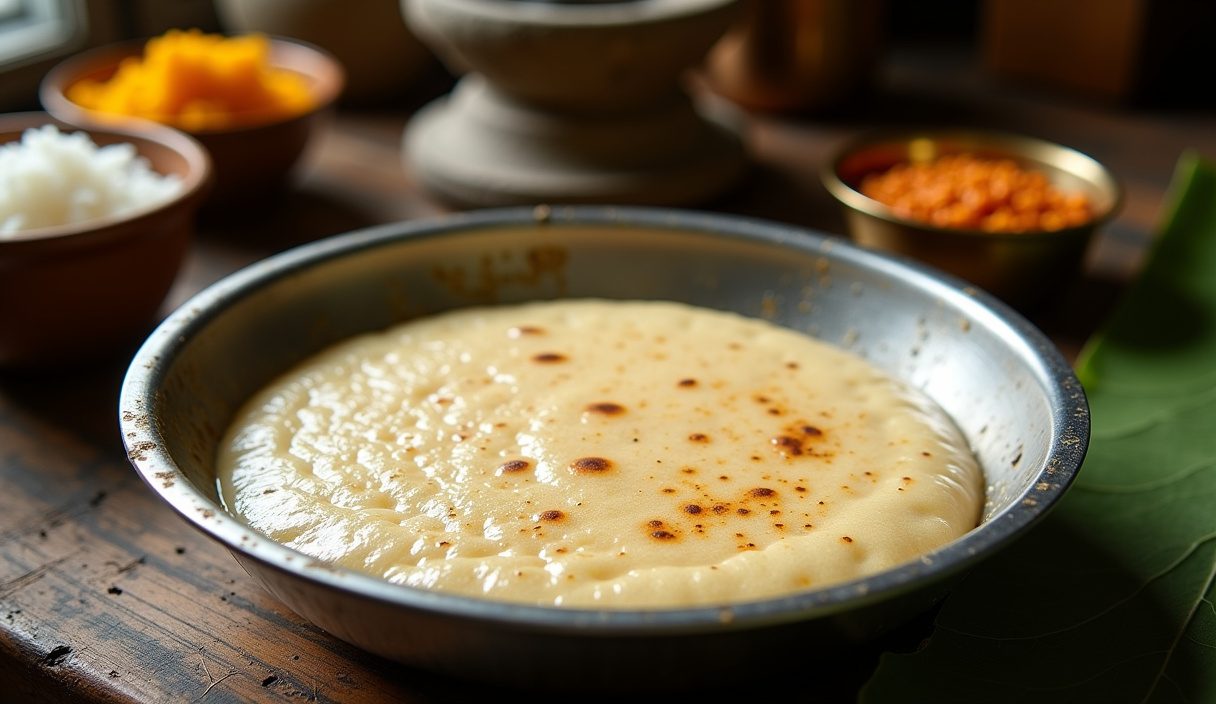
The rice to dal ratio, why fenugreek belongs in the soak, how long to ferment at your room temperature, and what to do when the batter refuses to rise.

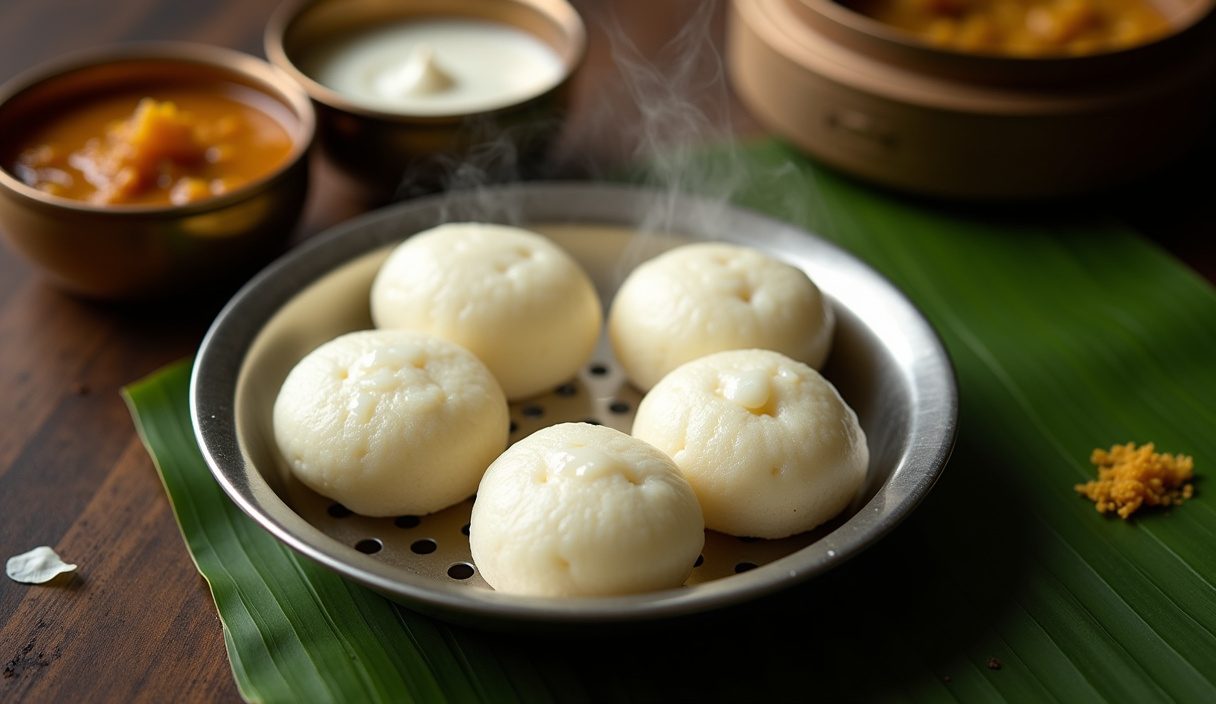
No fermentation here, just a thick aerated urad dal batter, a wet palm and oil at the right temperature. The shaping is the part that takes practice.
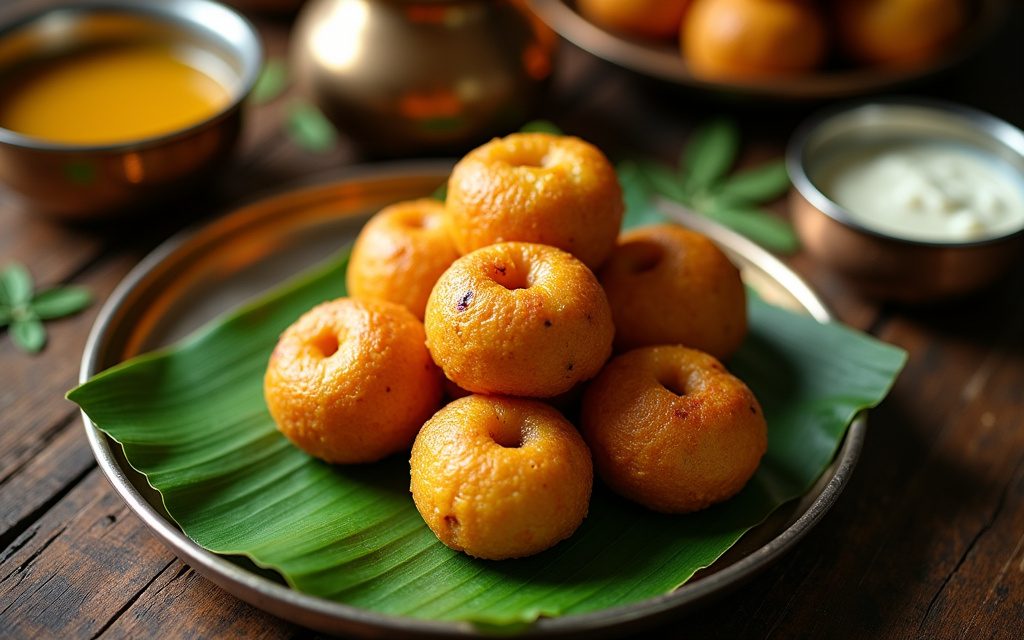
Medu vada is the savoury doughnut of South India: crisp outside, soft and almost fluffy inside, with a hole in the middle that exists for a practical reason rather than a decorative one. It appears beside idli at breakfast, drops into a bowl of sambar to become sambar vada, and sits in curd to become thayir vada.
Unlike dosa and idli, there is no fermentation here. The batter is made and used the same day. That removes the overnight variable but replaces it with two others: getting enough air into the batter, and shaping a ring on a wet palm without it collapsing.
Some households add finely chopped onion. It tastes good and it makes the batter harder to shape and more prone to absorbing oil, so leave it out until you are confident.
Soak the dal for three to four hours, no longer. Over-soaked dal holds too much water and gives a batter that will not hold its shape.
Drain it thoroughly, and this time do not use the soaking water to grind. This is the opposite of the advice for dosa batter, and the reason is simple: here you want the batter as thick as it can possibly be while still grinding. Add water a tablespoon at a time, and use as little as you can — often no more than a quarter cup in total for a cup of dal.
Grind until the batter is white, smooth and very fluffy. In a wet grinder, fifteen to twenty minutes. In a mixer, work in two batches, pulsing, scraping down often, and be patient.
Then beat it. Take the ground batter in a bowl and whisk it hard with your hand or a spoon, in one direction, for two or three minutes. This is the step that makes the difference between a dense vada and a light one. Test it the same way as for idli: a small blob dropped into a glass of water should float immediately. If it sinks, keep beating.
Fold in the chillies, ginger, curry leaves, pepper, asafoetida and salt only at the end. Salt added before grinding loosens the batter.
This is the part that takes practice, and everyone's first two are ugly. Have a bowl of water beside you.
The hole is not decoration. It increases the surface area and lets the centre cook through before the outside overbrowns. A vada without a hole is often raw in the middle.
If shaping on a palm defeats you, use a square of wet banana leaf or a piece of plastic sheet: pat the batter out on that, make the hole, and invert it into the oil. It works perfectly well and it is what many people do.
Oil temperature is the other half of the battle. You want medium-hot, around 175°C. Test it by dropping a small piece of batter in: it should sink briefly then rise steadily and sizzle. If it shoots straight to the surface and browns immediately, the oil is too hot and the vada will be raw inside. If it sits at the bottom, the oil is too cool and the vada will drink it.
Fry three or four at a time, not more — crowding drops the temperature. Turn them once the underside is pale gold, and fry until both sides are deep golden and the sizzling has quietened noticeably. That drop in sound means the moisture has cooked off, and it is a more reliable signal than colour.
Drain on a rack rather than paper if you can; paper traps steam against the underside and softens it.
Either the oil was too cool, or the batter was too loose. Both are common. Check the oil with a test blob before every batch, and if the batter is slack, beat in a tablespoon of rice flour or fine rava and let it rest ten minutes.
Too much water in the grind. Add a tablespoon of rice flour or semolina, fold it through, and rest for ten minutes. Make sure your palm is wet, not dripping.
Under-ground or under-beaten dal. The float test is the check: if the batter does not float, it has no air in it. Grinding too much water in also causes a dense result because you cannot beat air into a thin batter.
Oil too hot, or no hole in the middle, or the vada were shaped too thick. Lower the heat, make the hole properly, and keep them to half an inch.
Not really. Urad dal batter loses its air within a couple of hours and begins to ferment, which makes it slack and sour. Grind it when you intend to fry. If you must hold it, refrigerate for no more than two hours and beat it again before shaping.
Sambar vada: drop freshly fried vada straight into a bowl of hot sambar and leave for two or three minutes so they soak but do not disintegrate. Serve immediately with a spoon of coconut chutney on top.
Thayir vada (curd vada): soak the fried vada in warm water for five minutes, squeeze gently between your palms to remove excess water, and submerge in lightly salted whisked curd. Chill for at least an hour. Finish with a tempering of mustard seeds and curry leaves, and a dusting of chilli powder. The water soak is essential; skip it and the vada stay dense.
The rice to dal ratio, why fenugreek belongs in the soak, how long to ferment at your room temperature, and what to do when the batter refuses to rise.
Why idli batter is ground differently from dosa batter, how long to steam, and the reasons idli comes out flat, dense, sticky or sour.
The grind, the chicory question, how tightly to pack the filter, and the long pour between tumbler and davara that gives the coffee its foam.